If you’ve already tapped into the world of Croatian wines, congratulations – you’re no longer a complete newbie! But maybe you’re overwhelmed by all the talk of Old World versus New World wines or the distinction between indigenous and international grape varieties even to think of food pairing.
Our team is here to provide a comprehensive guide to help you navigate the basics and explore some of the most exquisite Croatian varieties and their food counterparts.
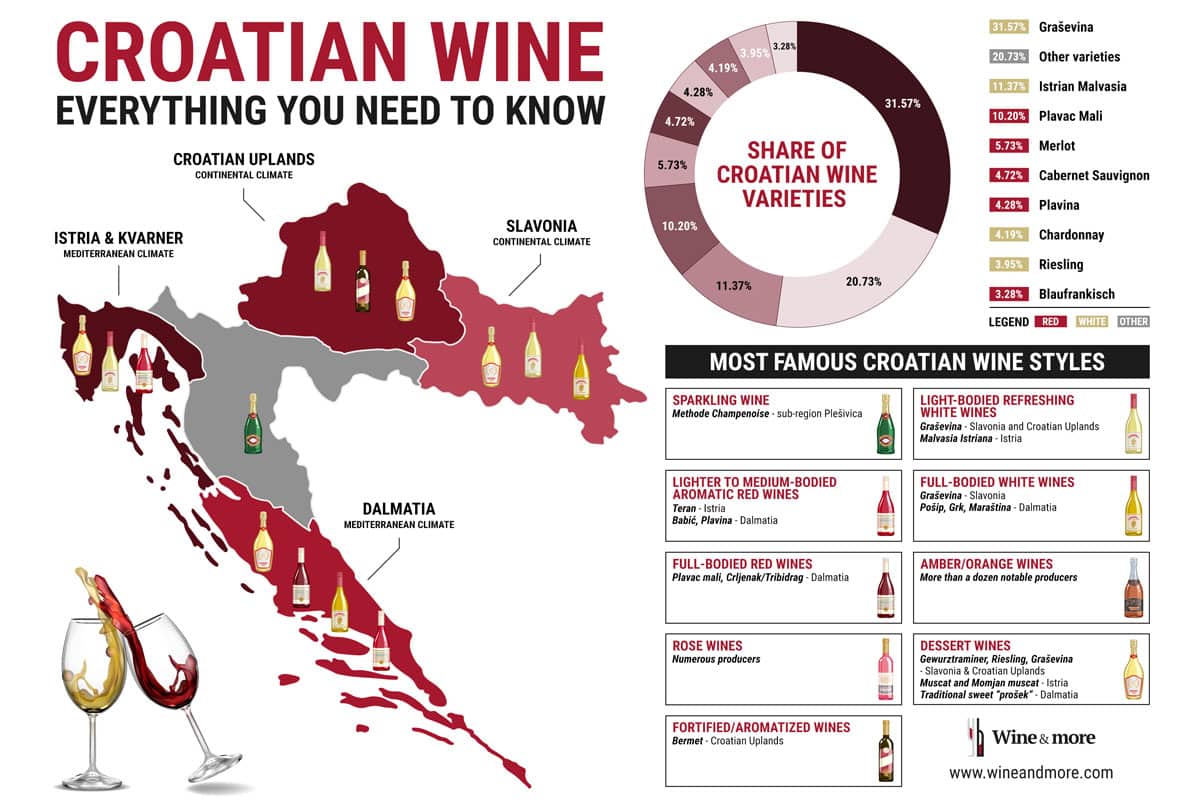
If you’re wondering where to begin your Croatian wine journey, look no further than your dining table! The key to choosing the perfect bottle is pairing it with your meal. But, firstly, have a look at our Croatian wine map to better understand the location of Croatian wine regions and the most popular varieties in each.
Croatian wine by Wine & more
Istria and Kvarner wine region
If you’re planning on indulging in some delicious white fish or seafood, you may want to explore the wines from the Istria and Kvarner wine region.
Have you heard of Žlahtina? It’s a hard-to-pronounce native grape variety from the picturesque island of Krk. This grape’s structure and refreshing character make it the perfect companion for appetizers and lighter foods.
On the other hand, the above-mentioned seafood is often paired with light and vibrant Malvasia Istrianafrom the Istria peninsula.
But what if you are preparing a strong wild game stew or roasted meat with potatoes? In that case, you need to look for a red wine with acids from cooler climate regions, which will complement fattier foods, but whose tannins won’t take over.
We choose Istria again because Teran, with its intense fruity aromas, is also naturally high in acids that refresh and complement every bite. Don’t be surprised if you find that one plate is not enough! That is the effect of Istrian Teran.
Slavonia and Danube wine region
Graševina wines from Slavonia and the Danube wine region is produced in many different styles. You can find fresh and young ones, aged and macerated (orange), dessert and archive Graševinas.
For example, iconic wine and food pairing is the spicy fish stew called “fiš-paprikaš” and fresher and younger Graševina. Stronger poultry dishes or similar sauces with various types of pasta, or mushroom risottos, are best paired with aged Graševina.
As you venture further east, the mighty Danube river awaits. With its abundance of sunny and warm days, this region is a wine lover’s paradise – a fact that even locals sometimes overlook.
Some mighty reds and aromatic whites are produced there by the true artisans of winemaking craft that create perfectly balanced wines, an ideal accompaniment to the local cuisine.
Traminer structure and aromatic components go unexpectedly well with sarma, a traditional minced meat and cabbage dish.
Juicy beef steak requires a juicy red wine with a full body, as provided by some of the international varieties, especially Bordeaux ones. Some exquisite wines are produced from Cabernet Sauvignon, Merlot, Pinot Noir, and Cabernet Franc.
Croatian Uplands wine region
Fatty freshwater fish likewise, besides Graševina, pairs well with another indigenous variety – Škrlet, specific to the Moslavina sub-region located in the central part of Croatia.
Sparkling wines from the renowned Plešivica sub-region are a match from heaven with clams, salmon, or shrimps.
Dalmatia wine region
The most diverse and generally the warmest in the southern part. The king of Dalmatia is a red variety – Plavac Mali, a traditional accompaniment to oily fish such as mackerel or tuna, however, this combination may be unusual to unaccustomed palates.
Due to its high tannins, it is advised to enjoy aged Plavac slowly and after dinner, with some mature hard cheese. But, if the feast begins with the Dalmatian prosciutto, no one will refuse (especially locals) Plavac Mali, even as an appetizer wine.
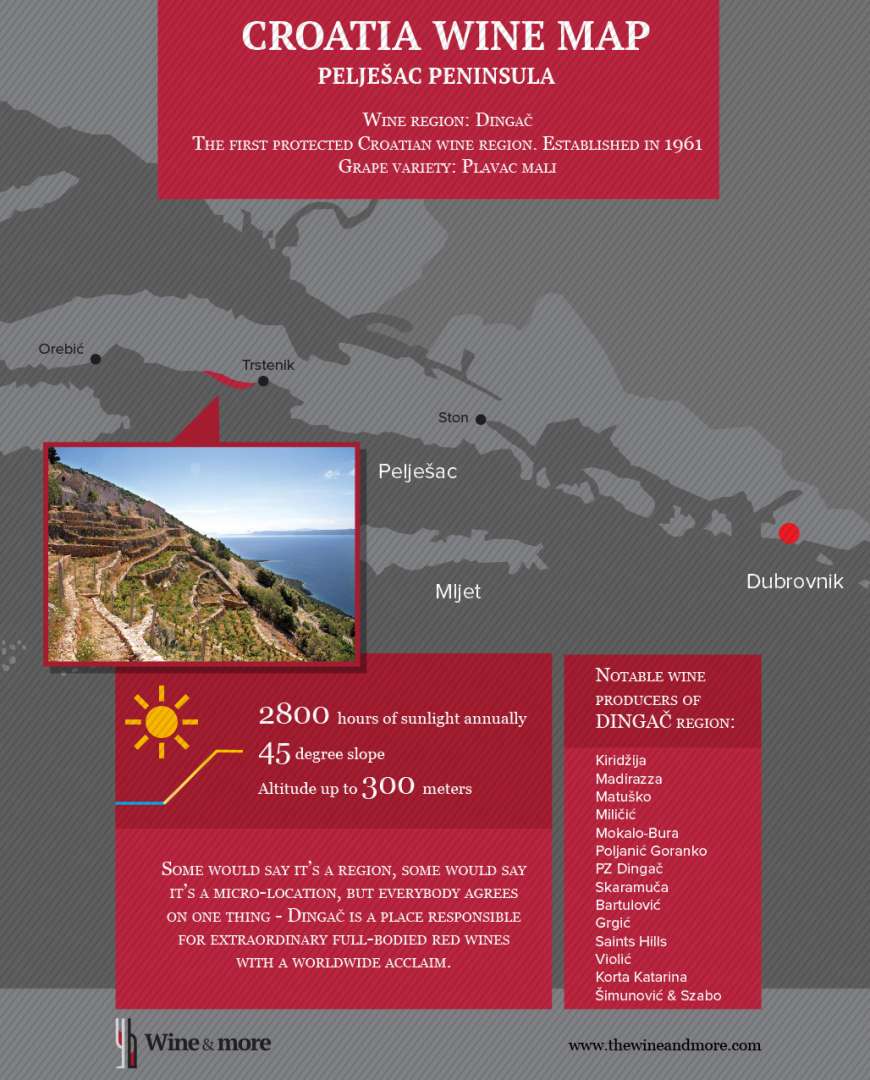
Some of the best examples of Plavac Mali wines come from the Dingač appellation.
If you’re looking for the perfect food pairing, this bold and expressive red pairs perfectly with high-protein foods like tuna steaks and beefsteaks and rich and indulgent high-fat foods like aged or blue cheese.
And if you’re a chocolate lover, you’re in luck! Plavac Mali, with a touch of oak influence, is the perfect match for dark chocolate.
Pelješac and Dingač appellation wine map
Equally attractive in the same role is Babić, a red wine made from an indigenous Dalmatian grape variety of the same name. Both go equally well with a rich beef sauce with polenta or something similar.
If you’re a seafood lover searching for a premium grilled whitefish with a strong taste, look no further than Pošip – Croatia’s native white from the Dalmatia wine region. And when it comes to pairing it with the perfect wine, there’s nothing quite like Pošip – the region’s prominent champion. But just like red wines, there’s a wide variety of white Dalmatian wines to choose from, each with its unique flavor profiles.
One of the most popular styles of Pošip is the young variety – perfect for pairing with noble fish dishes. Whether barrel-aged or not, this full-bodied wine can hold its own against heavier fare.
Did you know?
Plavac Mali is Croatia’s most widespread and important red grape variety. Its genetic “father” is the variety called Tribidrag (Crljenak Kaštelanski), internationally known as Zinfandel.
Looking for the perfect gift for the wine lover or foodie in your life? Look no further than a bottle of Croatian wine.
Still trying to figure out where to start, our expert team curated and handpicked the best examples of Croatian wines and special wine cases!
So why add them to your collection and prepare some Croatian-themed wine and food pairing?